MEDICAL IMAGING TECHNOLOGY

DICOM, PACS and Radiology Software Development

Build connected medical imaging solutions that support image management, radiology workflows, and healthcare system interoperability. Techbit Solutions develops customized radiology software and integrations tailored to imaging environments and operational requirements.
  • DICOM, PACS, and RIS development
  • Custom medical image viewers
  • Imaging integrations with EHR and EMR systems
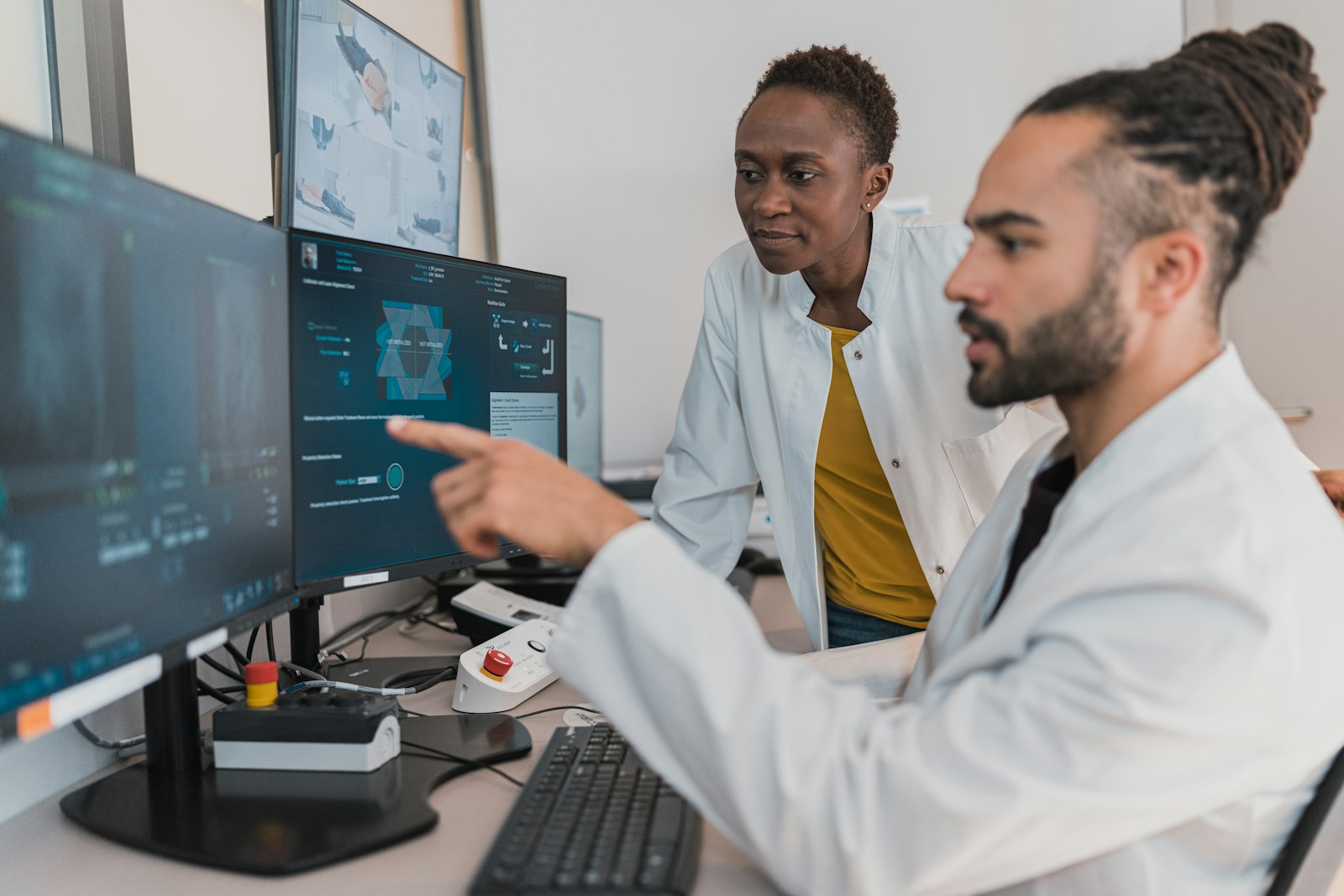
Two medical professionals in white coats reviewing digital imaging on computer monitors

Connecting Medical Imaging with Modern Healthcare Workflows

Radiology depends on fast, reliable access to images and the information around them. When modalities, archives, and reporting systems are poorly connected, radiologists lose time locating studies and referring clinicians wait longer for results. Well-designed imaging software keeps studies organized, available to authorized users, and connected to the clinical systems that need them.

Reliable Image Access

Authorized users can locate and view studies when they need them.

Organized Imaging Data

Studies, series, and metadata stored and indexed consistently.

Connected Systems

Imaging workflows linked with RIS, EHR, and other clinical platforms.

THE CHALLENGE

Where Imaging Workflows Break Down

Imaging environments often grow piece by piece, with equipment and software from different vendors. Over time, that creates friction for radiologists, technologists, and IT teams.

Fragmented Imaging Systems

Images and reports spread across separate archives, viewers, and departments are hard to bring together.

Complex Image Storage and Retrieval

Growing study volumes put pressure on storage capacity, retrieval times, and archive management.

Disconnected Radiology Workflows

Scheduling, image review, and reporting often run in tools that do not share status or context.

Interoperability and Data Exchange Challenges

Different vendors, formats, and interfaces make it difficult to exchange imaging data reliably.

RADIOLOGY SOLUTIONS

Medical Imaging Software We Develop

From individual components to connected imaging platforms, each solution is scoped around your modalities, existing systems, and clinical workflows.

DICOM Software Development

Build applications that read, write, route, and manage DICOM objects and their metadata.

PACS Development and Integration

Develop custom PACS components or connect existing archives with the rest of your imaging environment.

Radiology Information System Integration

Link RIS scheduling, orders, and reporting with imaging and clinical systems.

Medical Image Viewer Development

Create web or desktop viewers with the navigation and display tools your clinicians need.

Imaging Workflow Management

Coordinate worklists, study status, and task assignment across radiology teams.

Healthcare Imaging Data Exchange

Share studies and results with authorized internal and external systems through supported interfaces.

Technical Capabilities for Imaging Environments

Imaging projects generally involve building something new, integrating what already exists, or both. We confirm modality, vendor, and interface compatibility through a technical assessment before committing to an approach.
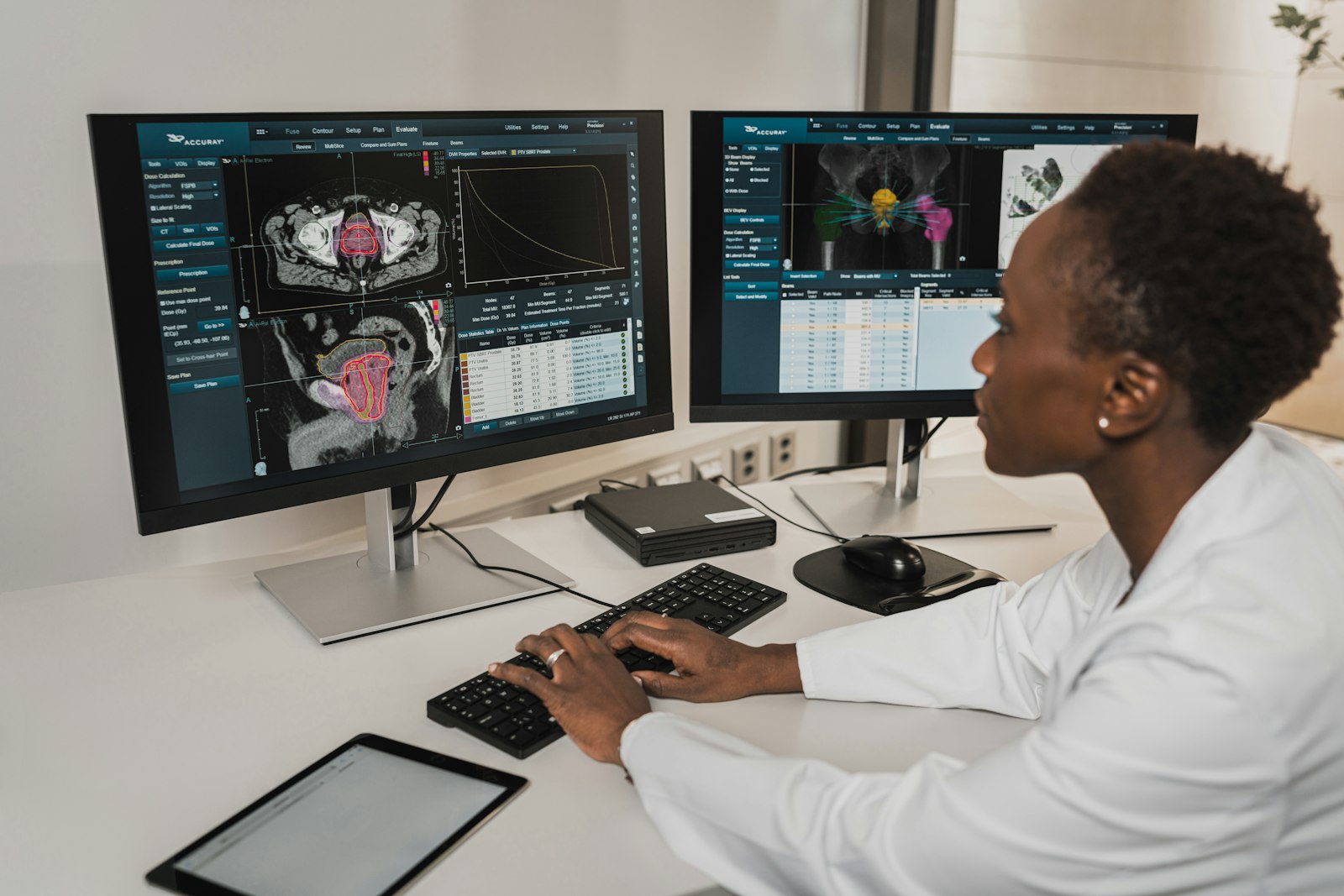
Clinician in a white coat typing at a dual-monitor medical imaging workstation

Building a New Imaging Platform

  • DICOM image handling and metadata workflows
  • Image storage, retrieval, and distribution
  • Diagnostic image viewing interfaces
  • Role-based access and image permissions

Integrating Existing Imaging Systems

  • PACS and RIS integration
  • Compatible EHR and EMR integrations
  • Imaging workflow automation
  • Standards-based data exchange where applicable

RADIOLOGY WORKFLOW

How a Connected Imaging Workflow Fits Together

Software can support each stage of the imaging journey, from the moment a study is captured to the point results reach the care team.

STEP 1

Image Acquisition

Modalities capture studies and their associated metadata.

STEP 2

Image Transfer

Studies are sent to the archive over configured network routes.

STEP 3

Storage and Retrieval

Images are stored, indexed, and retrieved on request.

STEP 4

Review and Reporting

Radiologists review studies and produce reports.

STEP 5

Clinical Integration

Results and image links reach RIS, EHR, and care teams.

AI-ASSISTED IMAGING

Integrating AI Where It Fits the Imaging Workflow

Artificial intelligence can be integrated into radiology workflows where it is technically and clinically suitable. Our role is to connect models and services to the workflow reliably. Any clinical use of AI outputs remains subject to appropriate validation, regulatory requirements, and review by qualified professionals.

Learn more about our AI medical software development.

Potential AI Capabilities

  • Image-processing integrations
  • AI inference workflow integration
  • Image annotation interfaces
  • Results exchange with compatible systems
  • Imaging analytics

Security and Interoperability for Imaging Data

Specific security controls and compliance obligations are defined for each project during discovery, based on your data, users, and environment.

Access Controls

Role-based permissions that determine who can view, share, or export studies.

Secure Data Transfer

Encrypted connections and authenticated endpoints for moving imaging data, as your requirements dictate.

Imaging Interoperability

Standards-based exchange using DICOM and related interfaces where the connected systems support them.


Related Healthcare Software Services

AI Medical Software

AI integrations for imaging, document processing, and healthcare workflows, built with validation and oversight in mind.

Healthcare Compliance and Integrations

HL7, FHIR, and DICOM integrations that connect imaging with the wider healthcare ecosystem.

Hospital Management System

Hospital software that connects patient administration, departments, and clinical systems.

DICOM, PACS and Radiology Software FAQs

DICOM (Digital Imaging and Communications in Medicine) is the international standard for storing, transmitting, and displaying medical images and their related information.
A Picture Archiving and Communication System (PACS) stores medical images and makes them available to authorized users for viewing and distribution.
A PACS manages the images themselves. A Radiology Information System (RIS) manages the surrounding workflow, such as scheduling, orders, patient tracking, and reporting. The two are commonly integrated.
Often, yes. Integration depends on the interfaces both systems support, such as HL7, FHIR, DICOMweb, or vendor APIs, and is confirmed through a technical assessment.
Yes. We can build web or desktop viewers with the display and navigation features your users need. Viewers intended for primary diagnosis may carry additional regulatory requirements, which should be assessed early.
Yes. Modernization can range from integrating existing systems to replacing individual components, depending on your environment and priorities.
AI services can be integrated into suitable workflows, for example to process images or return results to a viewer. Clinical validation and regulatory review depend on the intended use of the AI output.
We review your modalities, archives, RIS, EHR, available interfaces, data volumes, and workflows, then recommend an integration approach and scope.

Build Better Connected Medical Imaging Workflows

Whether you’re building a new imaging application or connecting existing radiology systems, let’s discuss your technical environment and goals.